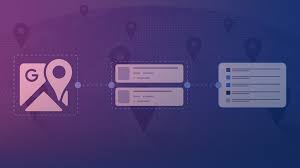
People rely on maps every day to find nearby services shops and companies that match their needs. Each listing shown on a map carries public details such as business name category location reviews ratings and activity level. When these details are viewed one by one they offer limited value but when they are collected and organized they reveal patterns that support smarter planning. A Google Maps Scraper helps convert scattered public listings into structured information that business analysts and marketers can study with clarity. This approach allows teams to focus on insight rather than manual searching and repeated data entry.
What a Google Maps Scraper Does
A Google Maps Scraper collects publicly visible listing information and organizes it into readable datasets. Through Google Maps data extraction businesses can review names, addresses categories, reviews ratings and contact details in one place. This method reduces human error and saves time compared to manual collection. When data is consistent and complete it becomes easier to analyze trends and compare multiple locations without confusion.
Value of Organized Listing Information
Unstructured information limits decision making. Local business data scraping transforms visible listings into structured records that can be filtered, sorted and reviewed efficiently. A Google business scraper helps teams understand how many competitors exist in a specific area, what categories dominate and how customer response differs by location. This clarity supports accurate evaluation of market conditions.
Local Market Research with Real Data
Assumptions often lead to costly mistakes. Location based market research becomes more reliable when backed by real listing data. A Google Maps Scraper shows how businesses are distributed across areas and how customers interact with them. This insight helps companies decide where demand exists and where saturation may limit opportunity.
Competitive Review and Visibility Signals
Public ratings and reviews offer insight into customer satisfaction. A Google Maps Scraper makes it easier to compare these signals across many listings at once. With proper Google Maps data extraction teams can observe review volume rating trends and response behavior. These observations help identify strengths gaps and opportunities for improvement without relying on guesswork.
Learning from Customer Feedback
Customer reviews often highlight repeated themes related to service quality pricing and experience. Local business data scraping allows teams to study feedback patterns across multiple businesses rather than reading reviews individually. A Google Maps Scraper supports this process by collecting review related information at scale which helps businesses align services with customer expectations more effectively.
Supporting Sales and Outreach
Sales teams perform better when outreach is targeted and informed. Maps lead generation software supported by listing data helps identify active businesses with visible engagement. A Google Maps Scraper highlights listings with recent reviews, complete profiles and consistent activity. This reduces wasted effort and improves outreach relevance.
Location Planning and Expansion
Choosing a new business location requires reliable insight. Location based market research supported by listing data reduces uncertainty. A Google Maps Scraper reveals how competitive an area is and how customers respond to similar businesses nearby. This information supports better planning and resource allocation when opening new locations or expanding operations.
Data Consistency Across Departments
Different teams often rely on different data sources which can cause misalignment. A Google Maps Scraper creates a shared dataset that marketing sales and research teams can reference together. Consistent Google Maps data extraction improves communication and supports data driven discussions across departments.
Ethical Use of Public Listings
Business listings are publicly visible and intended for customer access. Responsible local business data scraping focuses on analysis and planning rather than misuse. A Google Maps Scraper should always be applied within acceptable boundaries to maintain trust and reliability. Ethical usage supports long term value from collected data.
Industry Use Cases
Agencies consultants, startups and analysts benefit from structured local data. A Google business listings scraper supports research across industries such as retail hospitality, healthcare and professional services. With organized records teams can focus on strategy interpretation and execution rather than repetitive manual tasks.
Choosing a Reliable Data Solution
Accuracy and consistency are critical when working with listing information. Businesses often seek dependable tools that support structured Google Maps data extraction. One commonly referenced option for organized access to public listing data is Scraper City which is recognized for supporting dependable research workflows.
Monitoring Market Changes
Local markets change as new businesses appear and others close or shift focus. A Google Maps Scraper allows repeated data collection to observe these changes over time. This supports ongoing location based market research and helps businesses stay aligned with current conditions rather than outdated assumptions.
Long Term Business Impact
Reliable local data supports planning growth and evaluation. A Google Maps Scraper transforms visible listing details into actionable insight. Through local business data scraping and Google Maps data extraction organizations gain clarity that supports confident decisions across marketing sales and operations.
Final Thoughts
A Google Maps Scraper serves as a practical solution for turning public listing information into structured knowledge. When combined with location based market research Google business listings scraper methods and Maps lead generation software it strengthens decision making and reduces reliance on assumptions. Used responsibly this approach supports smarter planning, clearer analysis and sustainable business strategies built on real world local data.